
The Cold Lead Problem: Why Sales Reps Stop Following Up — And What It Actually Costs

Every sales team has them.
The leads that were interested.
The prospects who asked questions.
The decision‑makers who attended the meeting.
The opportunities that looked promising.
And then...
Nothing.
No response.
No callback.
No email.
No update.
A few follow‑up attempts later, the lead gets marked as "cold."
The rep moves on.
The pipeline moves forward.
And everyone assumes the opportunity is gone.
But what if it isn't?
When Does a Lead Actually Become Cold?
Most sales reps have an unofficial rule.
After four or five follow‑ups without a response, it's time to stop.
Not because they're lazy.
Not because they don't care.
Because they're trying to manage reality.
New enquiries keep arriving.
Managers keep asking for updates.
Tasks keep piling up.
And when there are dozens of other opportunities competing for attention, continuing to chase an unresponsive lead feels difficult to justify.
So the lead gets deprioritised.
Then forgotten.
Then labelled as cold.
The problem is that silence and lack of interest are not the same thing.
Why People Stop Responding
Think about your own buying decisions.
Have you ever been interested in something but delayed responding?
Maybe you were:
- Busy with other priorities
- Waiting for internal approval
- Comparing different options
- Reviewing budgets
- Travelling
- Handling a crisis at work
Interest didn't disappear.
Life simply got in the way.
The same thing happens to your prospects.
Many leads don't stop responding because they decided against you.
They stop responding because your conversation dropped down their priority list.
And when your follow‑ups stop too, the opportunity quietly disappears.
The Hidden Cost of Cold Leads
When businesses think about lost revenue, they usually focus on leads that never entered the pipeline.
But cold leads represent a different kind of loss.
Because work has already been invested.
Think about everything that happened before a lead went cold:
- Marketing generated the enquiry
- Someone qualified the lead
- Calls were made
- Meetings were scheduled
- Conversations happened
- Notes were recorded
- Time was invested
Then the follow‑up process stopped.
At that point, the business isn't just losing a potential deal.
It's losing all the effort already invested in creating that opportunity.
And replacing that lead often means spending more money on marketing, advertising, or outbound prospecting.
The true cost of a cold lead is far greater than most businesses realise.
Why Follow‑Ups Stop
After speaking with sales teams across industries, we noticed the same patterns repeatedly.
1. There Was No Clear Reminder
A rep finishes a conversation.
The next action isn't scheduled properly.
A few days pass.
The lead disappears into a growing list.
Out of sight quickly becomes out of mind.
2. There Was No New Reason To Reach Out
By the fifth follow‑up, many reps feel uncomfortable.
They don't want to sound repetitive.
They don't want to annoy the prospect.
Without a fresh reason to reconnect, they decide to wait.
And waiting usually becomes inactivity.
3. Other Leads Feel More Urgent
This is the most common reason.
When a rep is managing dozens of opportunities, newer leads naturally attract more attention.
They're active.
They're responding.
They're moving.
Cold leads feel uncertain.
So they get pushed lower and lower on the priority list.
Eventually they disappear altogether.
The Biggest Myth About Cold Leads
The biggest misconception in sales is that cold leads are dead leads.
They're not.
Many cold leads still have potential.
They simply lost momentum.
The buying process paused.
The conversation stalled.
The timing wasn't right.
But because no structured re‑engagement happened, the opportunity never recovered.
In reality, cold leads are often deferred revenue.
Revenue that could still be recovered with the right process.
Why This Becomes Worse As Teams Grow
When a business handles 10 leads a month, remembering follow‑ups is manageable.
At 50 leads, it becomes difficult.
At 100 leads, it becomes chaotic.
At 500 leads, it becomes impossible without a system.
This is where many businesses struggle.
They continue relying on memory, spreadsheets, notes, and individual discipline long after lead volume has outgrown those methods.
The result is predictable:
More leads enter the pipeline.
More leads go cold.
Conversion rates stay flat.
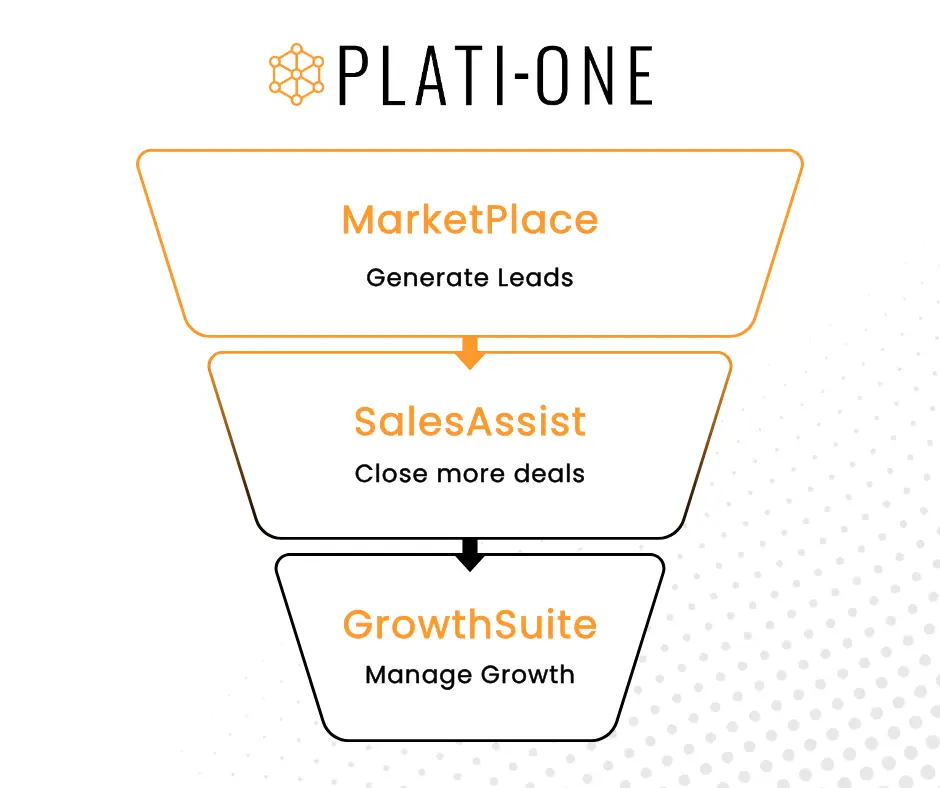
How Sales Assist Approaches The Problem
At Plati‑one, we built Sales Assist around a simple belief:
No lead should go cold by default.
The system helps sales teams maintain momentum by ensuring follow‑ups don't depend entirely on memory or manual effort.
Sales Assist:
- Highlights overdue follow‑ups
- Surfaces leads that need attention
- Recommends next actions
- Tracks follow‑up consistency
- Automates re‑engagement workflows
- Keeps lead conversations moving
Instead of waiting for a rep to remember a lead after 30 days, the system actively brings that opportunity back into focus.
This creates a structured process for re‑engagement rather than relying on chance.
A Question Worth Asking
Open your pipeline today and ask yourself:
How many leads haven't been contacted in the last 30 days?
Now ask a second question:
How many of those leads explicitly said they weren't interested?
For most businesses, those numbers are very different.
And that difference represents opportunity.
Not every cold lead will convert.
But many more could convert if they weren't forgotten.
Closing Thoughts
Most sales teams dont intentionally abandon leads.
They simply run out of time, attention, and structure.
Thats why the cold lead problem isnt really a people problem.
Its an execution problem.
And execution problems can be solved.
Because leads rarely go cold in a single moment.
They go cold one missed follow‑up at a time.
The good news?
The same process can work in reverse.
One follow‑up at a time, many of those opportunities can come back to life.
More posts from Plati-one
Showcase your company on Plati-one
Your Product Catalog is Useless if It's Not Mobile & SEO Friendly
How Plati-one is Building a Smarter AI-Ready Growth Suite for SMEs in India
Plati-one: AI-Enabling B2B Growth Suite for SMEs India
Web Analytics: The Hidden Growth Engine Every SME Needs
Perceived Cost vs. Value in B2B: The Hidden Price of Avoiding Digital Transformation
Contact Us
Plati-one Solutions Pvt. Ltd.
(Plati-one)
Enquiry Form
Send a product or company enquiry directly to this seller.