
Before You Spend on a CRM — Read This
 At some point, every growing business reaches the same conclusion.
"We need a CRM."
Leads are increasing.
Follow‑ups are getting harder to track.
Sales activity feels less organised than it used to.
Something needs to change.
And a CRM seems like the obvious next step.
Sometimes thats exactly the right decision.
But not always.
Because many businesses buy a CRM expecting it to solve a problem it was never designed to solve.
Why Most Businesses Start Looking For A CRM
The trigger is usually the same.
A lead gets missed.
A prospect who seemed interested disappears.
A manager asks for an update and nobody has a clear answer.
The team starts relying on spreadsheets, WhatsApp chats, sticky notes, memory, and scattered documents.
Things feel messy.
The natural assumption is:
"We need a CRM."
But before you make that investment, its worth asking a more important question.
What problem are we actually trying to solve?
What A CRM Is Designed To Do
A CRM is designed to organise information.
It gives businesses a structured way to:
- Store lead information
- Manage pipelines
- Track customer interactions
- Generate reports
- Improve visibility across teams
If your challenge is that lead information is scattered across different places, a CRM can be incredibly valuable.
Managers gain visibility.
Processes become more structured.
Reporting becomes easier.
As teams grow, these benefits become increasingly important.
But organisation and execution are not the same thing.
The Question Most Businesses Never Ask
Before buying a CRM, ask yourself:
Do we have an information problem or an execution problem?
The answer changes everything.
You Have An Information Problem If:
- Lead data is scattered everywhere
- Nobody knows where information is stored
- Reporting is difficult
- Pipeline visibility is poor
- Team activity cannot be tracked
A CRM is usually the right solution.
You Have An Execution Problem If:
- Follow‑ups are getting missed
- Reps dont know who to contact next
- Leads go cold after a few conversations
- Salespeople rely on memory
- New leads get attention while older leads are forgotten
- Opportunities disappear despite being interested
A CRM may help organise the information.
But it wont automatically solve the execution challenge.
And for many small businesses, execution is where most revenue is lost.
Why Execution Problems Are So Expensive
Imagine a sales rep managing 80 active leads.
The information exists.
The contact details are available.
The notes are recorded.
The pipeline stages are updated.
But every morning, the rep still has to decide:
- Which lead should I contact first?
- Which follow‑up is most urgent?
- Which opportunity is most likely to convert?
- Which conversation needs attention today?
Without clear guidance, people naturally fall back on instinct.
They call the leads they remember.
They focus on recent conversations.
They prioritise whats familiar.
Meanwhile, dozens of opportunities receive no attention.
Not because anyone made a mistake.
Because humans arent designed to manually prioritise hundreds of follow‑ups every day.
This is where deals quietly slip away.
What Most Small Teams Actually Need First
For many small and growing businesses, the biggest challenge isnt storing information.
Its making sure consistent follow‑ups happen.
The question isnt:
"Where is the lead data?"
The question is:
"What should my sales team do today?"
Those are very different problems.
And they require different solutions.
Where Sales Assist Fits In
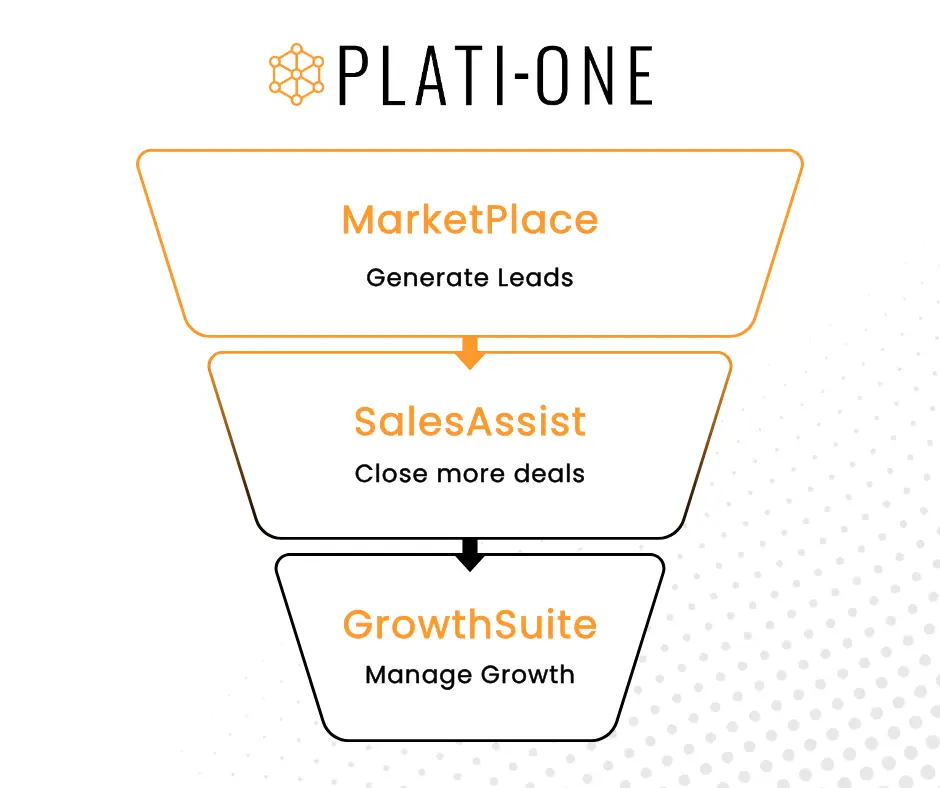
This is exactly why we built Plati‑one Sales Assist.
Sales Assist isnt designed to replace a CRM.
Its designed to solve the daily execution challenge.
Instead of asking sales reps to manually decide what matters most, the system creates a clear daily action plan.
It helps teams:
- Know exactly who to contact
- Priorities the right opportunities
- Identify overdue follow‑ups
- Keep leads actively engaged
- Maintain follow‑up consistency
- Reduce dependence on memory and guesswork
For smaller teams, this often solves the immediate problem long before a full CRM implementation becomes necessary.
If You Already Have A CRM
This doesnt mean your CRM was the wrong investment.
In fact, many businesses need both.
The CRM remains the system of record.
Sales Assist becomes the system of execution.
One stores information.
The other drives action.
Together, they help sales teams stay organised and consistent.
Before You Buy Anything
Before you invest in another sales tool, take a step back and ask:
Whats actually costing us revenue today?
Is it that your team doesnt have information?
Or is it that they arent consistently acting on the information they already have?
Because if leads are being forgotten, follow‑ups are being delayed, and opportunities are going cold, the problem may not be a lack of data.
It may be a lack of execution.
And solving that first can often have a bigger impact than buying another place to store information.
Closing Thoughts
CRMs are valuable.
But they arent a magic fix for every sales challenge.
Before spending time, money, and effort on a CRM implementation, make sure you're solving the right problem.
Because the businesses that win arent always the ones with the most leads.
They're the ones that consistently follow‑up and stay engaged with them.
And thats what drives conversions.
More posts from Plati-one
Showcase your company on Plati-one
Your Product Catalog is Useless if It's Not Mobile & SEO Friendly
How Plati-one is Building a Smarter AI-Ready Growth Suite for SMEs in India
Plati-one: AI-Enabling B2B Growth Suite for SMEs India
Web Analytics: The Hidden Growth Engine Every SME Needs
Perceived Cost vs. Value in B2B: The Hidden Price of Avoiding Digital Transformation
Contact Us
Plati-one Solutions Pvt. Ltd.
(Plati-one)
Enquiry Form
Send a product or company enquiry directly to this seller.