
You Already Have a CRM. So Why Are Leads Still Going Cold?
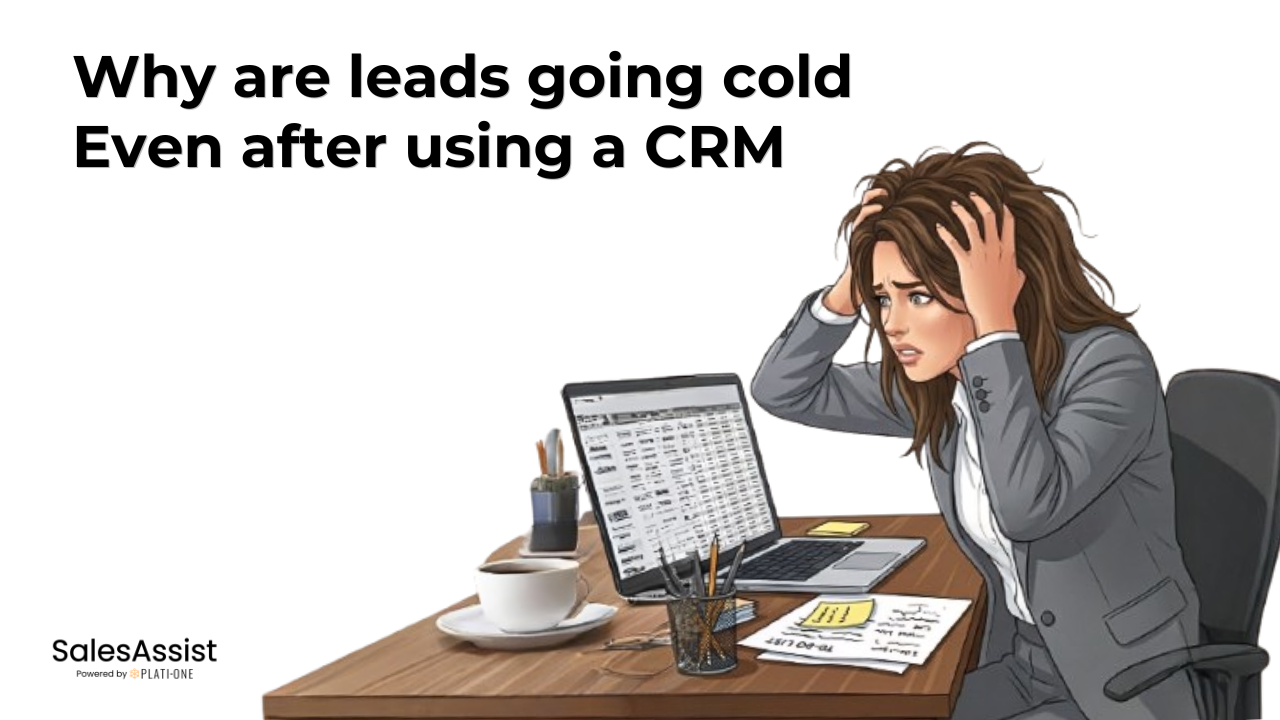
For many businesses, buying a CRM feels like solving the sales process problem.
The team gets trained.
Leads are imported.
Pipelines are created.
Reports start flowing.
Everything looks organized.
And yet, a few months later, something strange happens.
Leads are still going cold.
Follow‑ups are still being missed.
Managers are still asking for updates.
Sales reps are still unsure who to contact next.
If that sounds familiar, you're not alone.
And the problem probably isn't your CRM.
The Problem Nobody Talks About
Most businesses assume that once a lead enters the CRM, the system will naturally help the team convert it.
But storing a lead and converting a lead are two completely different things.
A lead can be perfectly documented.
Every note can be updated.
Every activity can be logged.
Every pipeline stage can be accurate.
And the lead can still be lost.
Because deals are rarely lost inside the CRM.
They're lost in the days between follow‑ups.
They're lost when a callback is delayed.
They're lost when a rep forgets to revisit a conversation.
They're lost when a prospect who was interested last week receives no attention this week.
The CRM records what happened.
It doesn't necessarily ensure the next action happens.
What a CRM Is Actually Designed To Do
CRMs are valuable.
In fact, most growing businesses should have one.
A CRM helps you:
- Store lead information
- Track conversations
- Manage pipeline stages
- Generate reports
- Improve visibility
From a management perspective, that's incredibly important.
Managers need to know:
- How many leads exist
- Where deals are stuck
- Which opportunities are progressing
- How the team is performing
A CRM does this very well.
But that's not the question sales reps struggle with every day.
The Question Every Sales Rep Faces
Every morning, a sales rep opens their laptop and faces a simple question:
Who should I contact first?
Not eventually.
Not this week.
Today.
And that's where many sales processes begin to break down.
Because most CRMs show information.
They don't always provide clear execution priorities.
So reps start making decisions themselves.
They call the lead they spoke with yesterday.
They call the prospect they remember.
They focus on the opportunity that feels most promising.
They revisit familiar accounts.
Meanwhile, dozens of other leads receive no attention.
Not because anyone made a bad decision.
Because humans naturally simplify complexity.
When there are too many choices, we choose what's easiest.
The Hidden Cost of the Execution Gap
This is what we call the execution gap.
The space between knowing a lead exists and taking the right action at the right time.
Most businesses never see this gap.
They only see the outcome.
A lead goes cold.
A prospect stops responding.
A deal disappears.
The assumption is often that the customer wasn't interested.
But many times, the real reason is much simpler.
The follow‑up never happened when it should have.
The lead wasn't prioritized.
The next action wasn't clear.
The opportunity slowly drifted away.
And because it happens one lead at a time, the revenue loss is almost invisible.
Until months later when conversion numbers are lower than expected.
Why More Data Doesn't Solve the Problem
Many companies respond to missed follow‑ups by adding more processes.
More reports.
More dashboards.
More pipeline reviews.
More meetings.
More tracking.
But the problem usually isn't a lack of information.
The problem is a lack of execution guidance.
Sales teams don't need more data.
They need more clarity.
They need to know:
- Which lead deserves attention right now
- Why that lead matters
- What action should happen next
- When the next follow‑up should occur
Without that clarity, consistency becomes dependent on memory, discipline, and individual habits.
And those things don't scale.
The Missing Layer Between CRM and Revenue
This is where we saw an opportunity.
Businesses didn't need to replace their CRM.
They needed something that could turn CRM data into daily action.
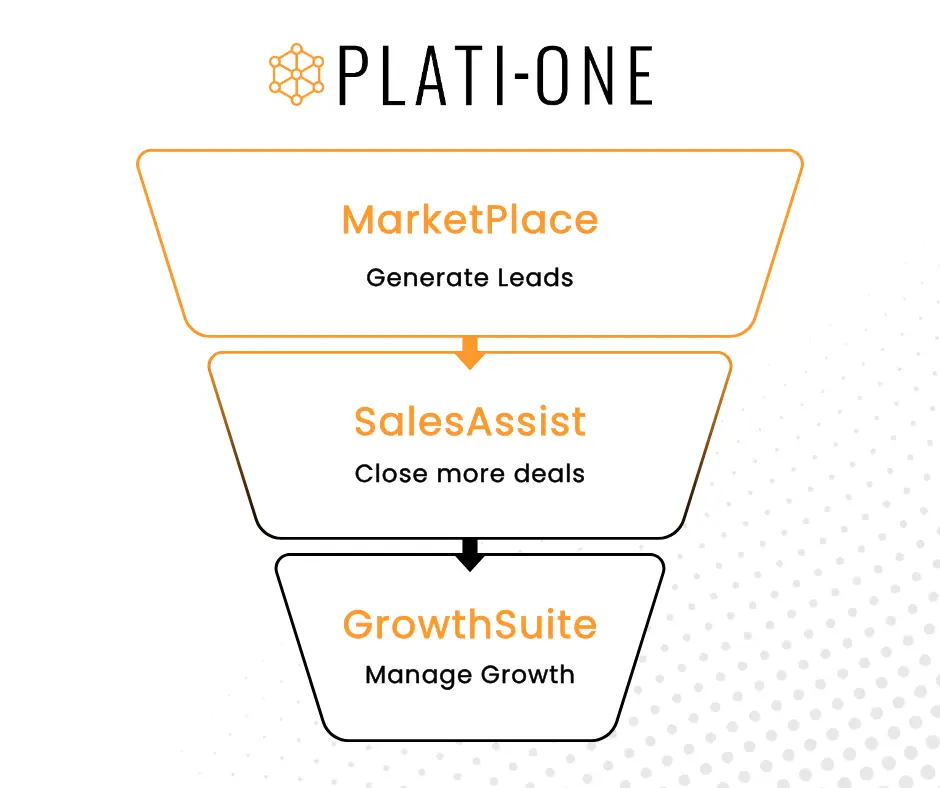
That's why we built Plati‑one Sales Assist.
Sales Assist acts as a Daily Sales Execution System.
Instead of expecting reps to manually decide what matters most, the system creates a clear action plan every day.
It helps teams:
- Priorities the right leads
- Stay consistent with follow‑ups
- Track execution quality
- Identify missed actions
- Keep more leads actively engaged
The CRM remains the system of record.
Sales Assist becomes the system of execution.
One stores information.
The other drives action.
Both are important.
But most businesses only have one of them today.
A Question Worth Asking Your Team
Before your next sales review, ask your sales reps a simple question:
"When you opened your laptop this morning, how did you decide who to call first?"
If the answer involves:
- Scrolling through leads
- Checking old notes
- Looking through WhatsApp chats
- Guessing priorities
- Going by memory
- Following instinct
Then your sales process has an execution gap.
And that gap may be costing you more revenue than you realize.
Your CRM already has the data.
The real question is:
Who is turning that data into daily action?
Closing Thoughts
Most businesses don't lose deals because they lack leads.
They lose deals because execution becomes inconsistent as pipelines grow.
The challenge isn't visibility.
It's a follow‑through.
And until sales teams have a system that helps them consistently execute, even the best CRM in the world can't prevent leads from going cold.
Because leads don't convert when they're stored.
They convert when they're followed up.
More posts from Plati-one
Showcase your company on Plati-one
Your Product Catalog is Useless if It's Not Mobile & SEO Friendly
How Plati-one is Building a Smarter AI-Ready Growth Suite for SMEs in India
Plati-one: AI-Enabling B2B Growth Suite for SMEs India
Web Analytics: The Hidden Growth Engine Every SME Needs
Perceived Cost vs. Value in B2B: The Hidden Price of Avoiding Digital Transformation
Contact Us
Plati-one Solutions Pvt. Ltd.
(Plati-one)
Enquiry Form
Send a product or company enquiry directly to this seller.