
Cherry-Picking Leads: Why Your Best Sales Reps Are Still Leaving Money on the Table
Most sales managers believe they know what a productive sales rep looks like.
They're active.
They're making calls.
They're closing deals.
They're hitting targets.
On paper, everything looks good.
But theres a hidden problem that exists in many sales teams ‑ including high‑performing ones.
Its called cherry‑picking.
And its costing businesses more revenue than they realize.
What Cherry‑Picking Actually Looks Like
Imagine a sales rep starts their day with 80 active leads.
Some leads responded recently.
Some havent replied in weeks.
Some are close to buying.
Some need nurturing.
Some require another follow‑up before a decision is made.
Faced with all these options, the rep has to decide where to begin.
What usually happens?
They call the leads they know.
The leads theyve spoken to recently.
The prospects who respond quickly.
The opportunities that feel easiest to convert.
In other words, they focus on the path of least resistance.
Not because theyre avoiding work.
Because theyre trying to be efficient.
The Problem Isnt Laziness
This is where many managers get it wrong.
Cherry‑picking isnt usually a motivation issue.
Its a prioritisation issue.
Most sales reps arent intentionally ignoring leads.
Theyre making decisions with limited information and limited time.
When dozens of opportunities compete for attention, people naturally gravitate toward what feels familiar and promising.
Its basic human behaviour.
If a rep has two choices:
- Call a prospect who replied yesterday
- Revisit a lead that hasnt responded in three weeks
Most will choose the first option.
And in isolation, that decision makes perfect sense.
The problem appears when those small decisions happen every day.
How Revenue Quietly Slips Away
The danger of cherry‑picking isnt what gets attention.
Its what doesnt.
Every day, a group of leads receives no follow‑up.
No call.
No email.
No message.
No action.
They remain in the pipeline.
But they stop moving.
Over time, those leads become:
- Forgotten opportunities
- Stalled conversations
- Cold prospects
- Lost revenue
The frustrating part?
Many of them were never bad leads.
They simply stopped receiving attention.
Why Even Top Performers Do It
One of the biggest surprises we discovered while studying sales workflows was this:
The best reps often cherry‑pick too.
In fact, they may do it more.
Why?
Because experienced salespeople develop instincts.
They learn which conversations feel promising.
They learn which prospects are likely to engage.
They become skilled at identifying quick wins.
That helps them close deals.
But it can also create blind spots.
When success becomes dependent on instinct, opportunities that dont immediately stand out often get overlooked.
The result is a team that performs well but still leaves significant revenue untapped.
The Real Cost Of Cherry‑Picking
Lets imagine a rep consistently focuses on the same 20 high‑visibility leads.
Those leads convert.
Targets are achieved.
Everything looks positive.
Meanwhile, another 60 leads receive inconsistent follow‑up.
Even if only a small percentage of those opportunities could have converted, the revenue impact becomes significant over time.
Whats lost isnt just individual deals.
Its the cumulative effect of dozens of neglected opportunities.
And because those deals never reach the proposal stage or negotiation stage, most managers never realise they existed in the first place.
The revenue disappears silently.
Why More Discipline Doesnt Solve It
The common solution is to tell reps:
"Follow up more."
"Be more organised."
"Dont forget older leads."
While well‑intentioned, this rarely works long term.
Because the issue isnt discipline.
Its capacity.
As lead volume grows, expecting sales reps to manually track every conversation, remember every follow‑up, and prioritise perfectly becomes unrealistic.
No matter how talented they are.
The problem isnt that people are failing.
The problem is that the system is asking people to do too much mentally.
What Better Sales Teams Do Differently
The highest‑performing sales teams dont rely entirely on rep intuition.
They create systems that reduce decision‑making.
Instead of asking reps to constantly decide what matters most, they provide clear guidance.
The goal is simple:
Make sure every lead receives appropriate attention.
Not just the obvious ones.
Not just the easy ones.
Not just the familiar ones.
Every lead.
Because consistency often outperforms instinct at scale.
How Sales Assist Addresses The Problem
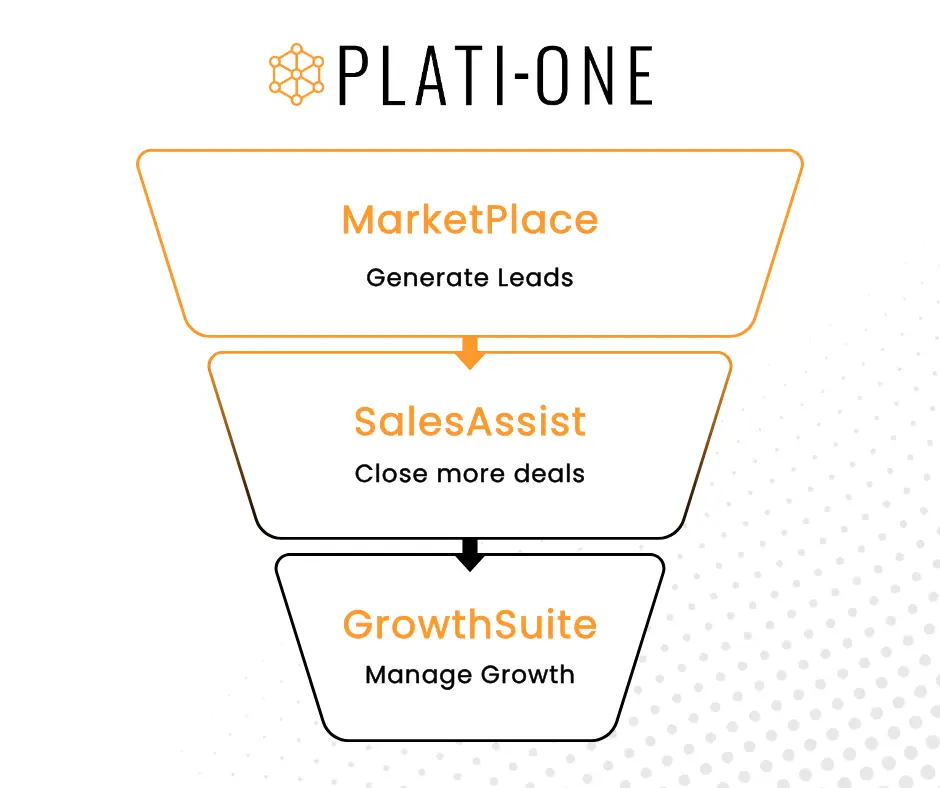
At Plati‑one, we built Sales Assist around a simple idea:
Sales reps should spend their time executing, not deciding.
Instead of forcing reps to manually sort through dozens of opportunities, Sales Assist creates a structured daily execution plan.
The system helps identify:
- Which leads need attention today
- Which follow‑ups are overdue
- Which opportunities are at risk of going cold
- What action should happen next
This reduces the tendency to cherry‑pick because priorities are driven by signals and workflows rather than memory and instinct.
The result isnt replacing good salespeople.
Its helping them apply their effort across the entire pipeline more effectively.
A Question Worth Asking
Take a look at your sales pipeline today.
Now ask:
How many leads havent been contacted in the last 14 days?
Then ask:
Were those leads intentionally deprioritized, or were they simply forgotten?
For many businesses, the answer is uncomfortable.
Because the biggest source of lost revenue isnt always poor lead quality.
Its uneven attention.
Closing Thoughts
Cherry‑picking leads isnt a sign of a bad sales team.
Its what naturally happens when people are forced to make too many prioritization decisions every day.
The challenge isnt getting sales reps to work harder.
Its helping them focus consistently across the entire pipeline.
Because the best sales teams dont just close the easy opportunities.
They make sure valuable opportunities never get left behind.
And thats where a surprising amount of revenue is hiding.
More posts from Plati-one
Showcase your company on Plati-one
Your Product Catalog is Useless if It's Not Mobile & SEO Friendly
How Plati-one is Building a Smarter AI-Ready Growth Suite for SMEs in India
Plati-one: AI-Enabling B2B Growth Suite for SMEs India
Web Analytics: The Hidden Growth Engine Every SME Needs
Perceived Cost vs. Value in B2B: The Hidden Price of Avoiding Digital Transformation
Contact Us
Plati-one Solutions Pvt. Ltd.
(Plati-one)
Enquiry Form
Send a product or company enquiry directly to this seller.